When you first start building Magic decks, it is easy to fill them with big, exciting cards. Huge creatures, flashy spells, and expensive finishers are usually the cards that catch your attention first. The problem is that if most of your deck costs five, six, or seven mana, you may spend the first few turns doing almost nothing.
That is where your mana curve comes in.
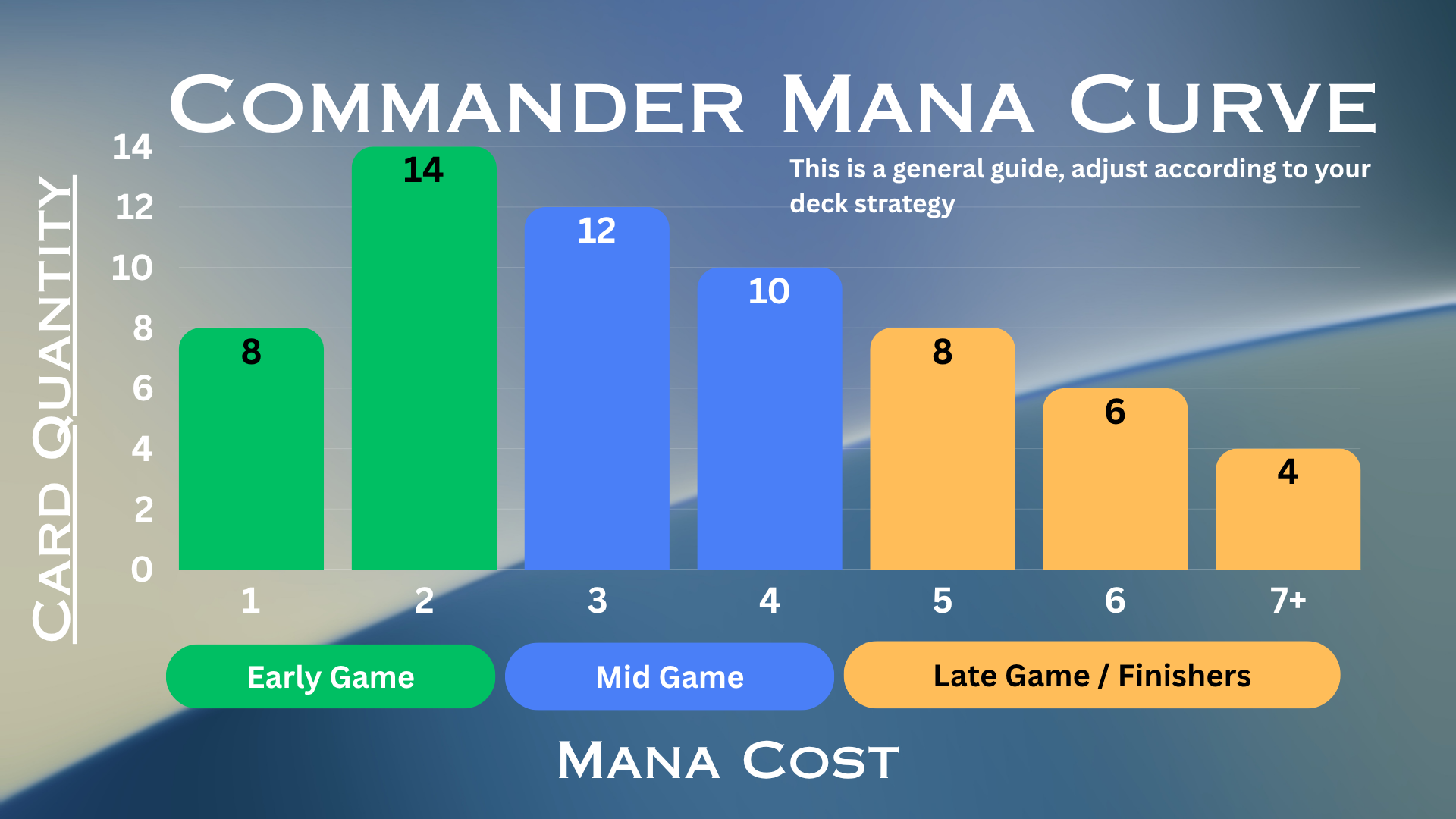
Your mana curve is simply a look at how much your cards cost to cast. A deck with a healthy curve usually has plenty of cards that cost one, two, and three mana, a smaller number of cards in the four- and five-mana range, and only a few expensive cards at the top end.
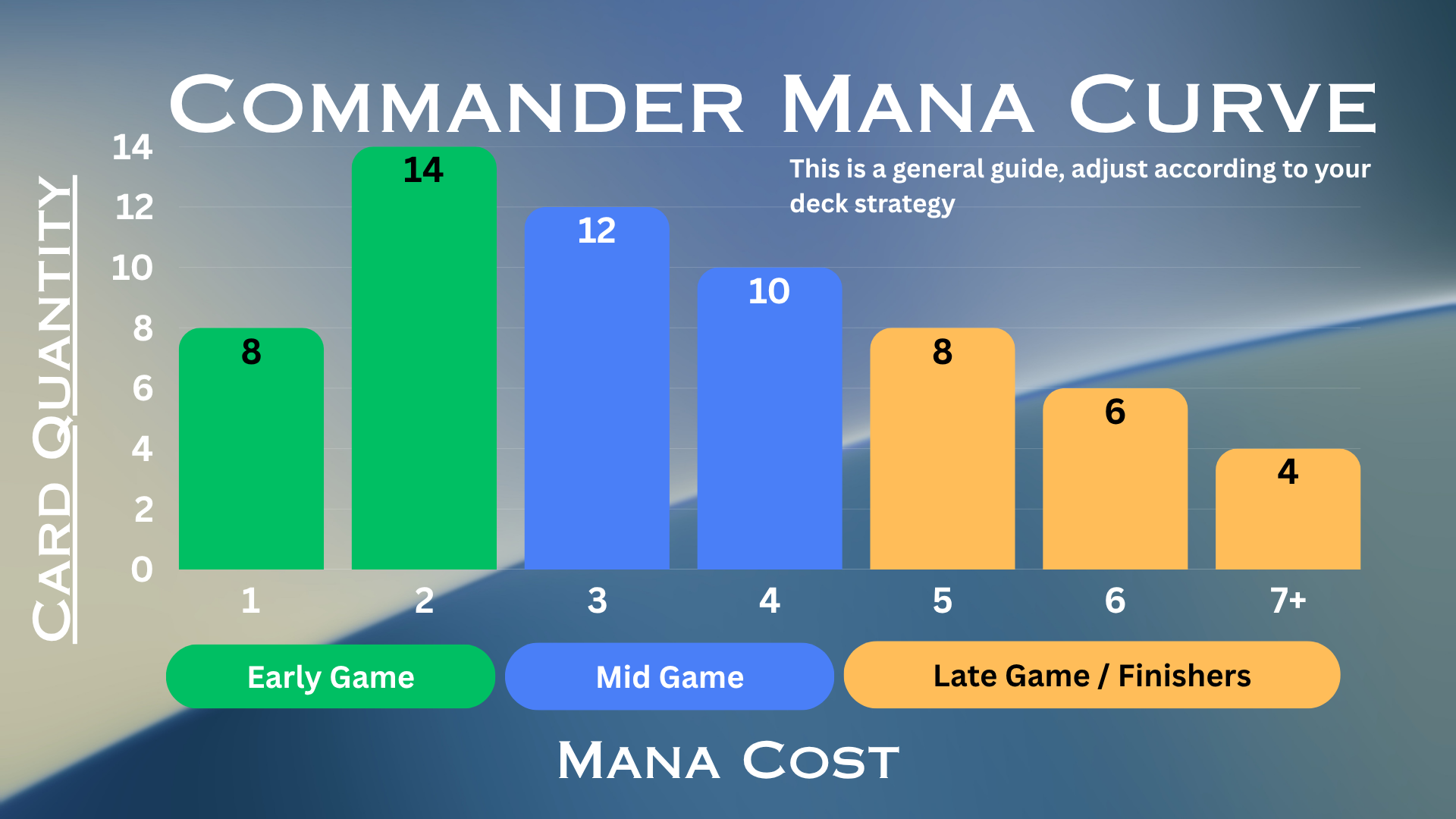
A helpful way to think about your mana curve is to divide it into three parts: early plays at one to two mana, mid-game plays at three to four mana, and late-game finishers at five mana or more. This will not look exactly the same for every deck, since it depends on your strategy, but it gives newer players a reliable starting point when asking, “Will my deck actually work?”
The goal is not to avoid expensive cards. Big spells can absolutely win games. The goal is to make sure you have things to do before you get to them.
For example, if your opening hand has a one-mana play, a two-mana play, and a three-mana play, you are much more likely to use your mana efficiently during the early turns. You can develop your board, play ramp, draw cards, remove a threat, or begin setting up your main strategy. On the other hand, if your hand is full of cards that cost six mana, you may be waiting several turns before you can meaningfully join the game.
A good place to start is by sorting your nonland cards by mana value. Look at how many cards cost one mana, two mana, three mana, and so on. If you notice that most of your deck starts at four mana, that is usually a sign you need more early-game options.
In Commander, this does not mean every deck needs to play like an aggressive deck. A slower deck can still have a strong curve by including cheap ramp, card draw, removal, and utility spells. Those cards help you stay involved in the early turns and make it easier to reach your bigger plays later.
Ramp also affects how your curve feels. If your deck has mana rocks, mana creatures, or land-ramp spells, you can reasonably support more expensive cards. Just remember that ramp only helps if you draw it early enough to use it. A deck cannot rely entirely on ramp while also skipping all of its low-cost plays.
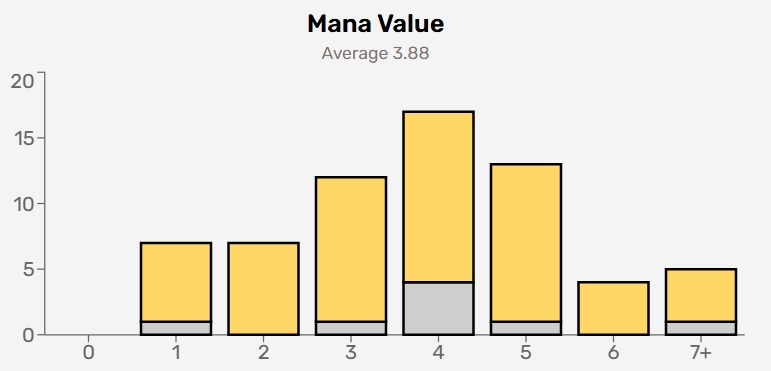
You also do not need to follow a standard mana curve as an absolute rule. A few of my favorite and best-performing decks have very different curves, as shown below.
 |
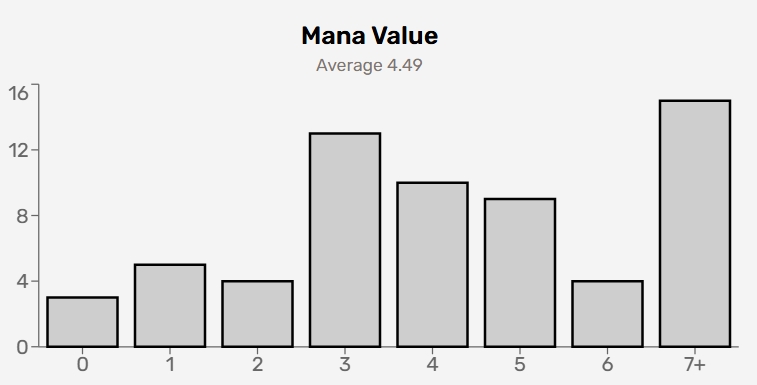 |
These decks still flow well because they have several ways to produce extra mana or cheat mana-expensive cards into play. That is the important part: your curve should make sense for the way your deck is built and the way it plans to win.
When you are deciding whether to keep an expensive card, ask yourself a simple question: “Is this card worth waiting for?” If the answer is yes, keep it. If it is just another large creature or spell that does not strongly support your plan, that slot may be better used on something cheaper that helps your deck run smoothly.
A mana curve is really about consistency. You want your deck to have useful things to do in the early game, strong plays in the middle turns, and a few powerful cards to close things out. Once you start paying attention to your curve, your decks will feel less clunky and your games will feel much more intentional.