
Buying a Commander preconstructed deck, usually called a precon, is one of the easiest ways to get into Commander. You get a complete 100-card deck, a commander (and usually a secondary commander option), a built-in strategy, and everything you need to start playing.
Simply open it, sleeve it up, shuffle, and you're ready for your first game.
The best part is that precons are designed to be upgraded over time. You don't need to replace half the deck—a few smart changes can make it more consistent, more focused, and more fun to play.
Start by Playing the Deck First
Before buying any upgrades, play the deck first.
I recommend playing three to five games before changing anything. This gives you enough time to see what the deck does well, where it struggles, and which cards never seem to pull their weight.
You may notice:
- you aren't drawing enough cards
- your mana feels slow
- your commander is stronger than you expected
- certain cards stay in your hand every game
After you have played a few games, ask yourself:
- Did I have cards to play early in the game?
- Did I run out of cards in my hand?
- Did I have a way to deal with a dangerous creature, artifact, or enchantment?
- Did my deck actually support what my commander wants to do?
- Were there cards that stayed in my hand because they cost too much or did not fit the game?
You do not need to remember every detail. Simply writing down a few cards that felt weak or clunky can help when it is time to make cuts.
Understand Your Commander’s Game Plan
Your commander tells you how your deck wants to win.
Ask yourself one simple question:
"What does my commander reward me for doing?"
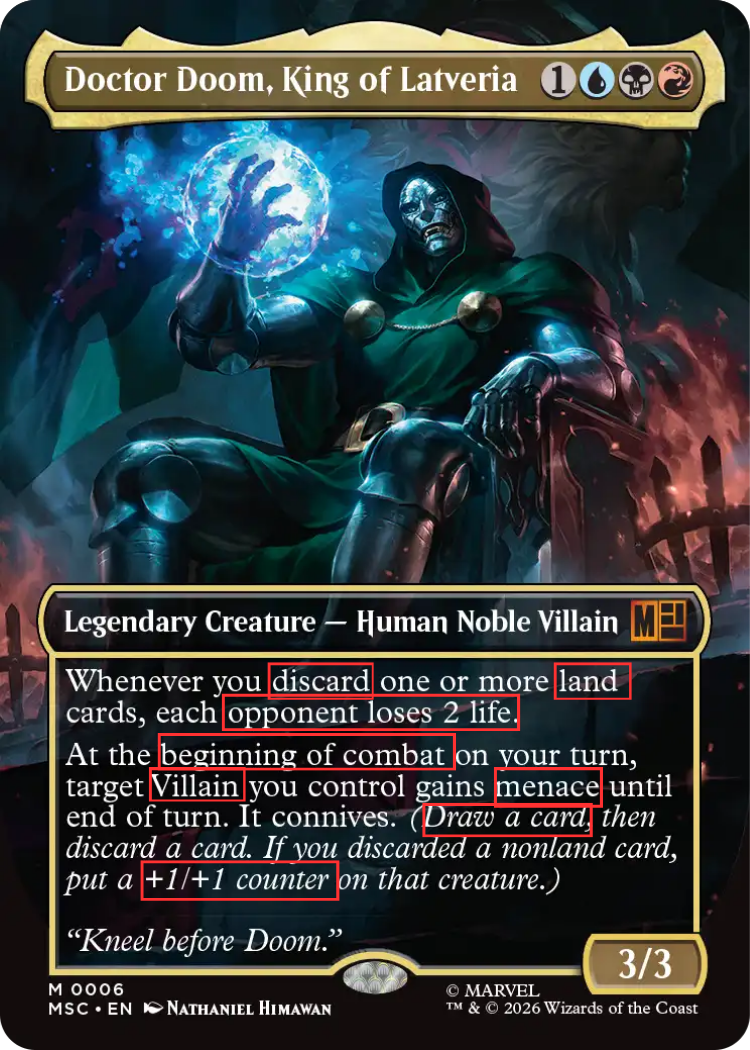
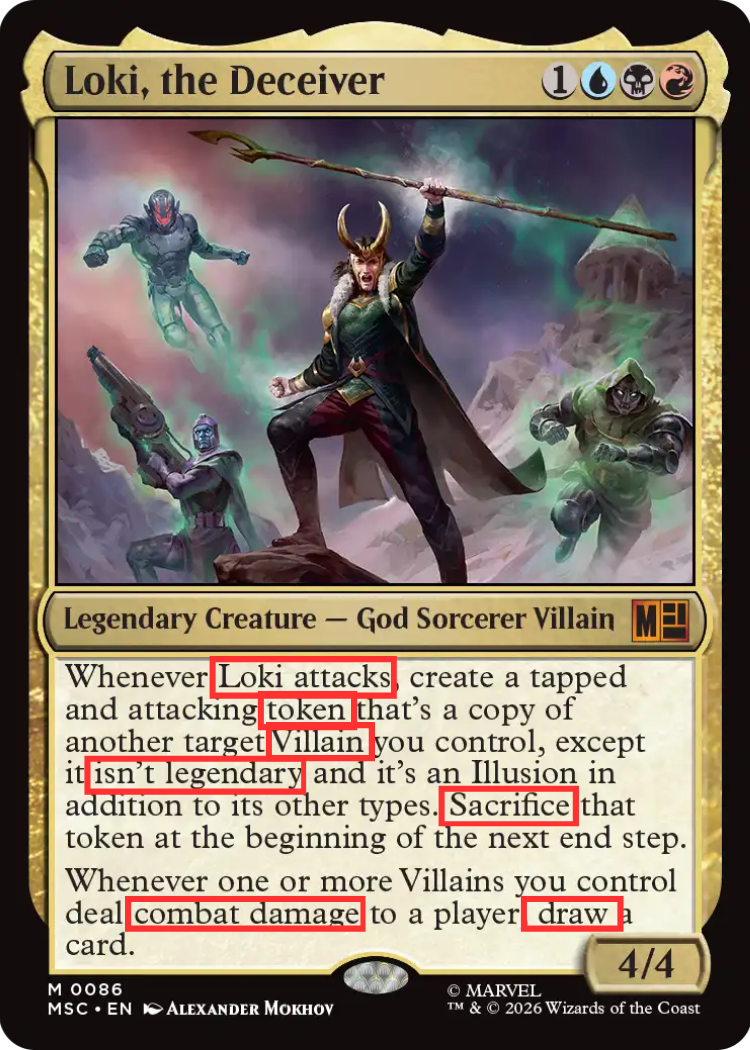
Let's use my latest precon, Doom Prevails for further examples. It offers two commander options. The primary Doctor Doom, King of Latveria or the secondary Loki the Deceiver.
 |
 |
|
|
Even though these commanders share the same deck, they want to win in completely different ways.
Doctor Doom rewards Villains and Connive, while Loki focuses on combat and creating copies.
Knowing which commander you want to build around makes it much easier to decide what to cut.
Once you know who your commander is, and what they do, look through the deck and separate cards into three groups:
- Cards that directly support the commander’s strategy
- Cards that are generally useful in Commander
- Cards that do not really help the deck’s plan (or high mana cost)
Below is a small handful of cards within the precon to look at, yours may be different change based on your personal stratagy. To simplify, will focus on 2 mechanics for each Commander
| Direct Support | Generally Useful | Least Helpful | |
| Doom (Villians/Connive) |
Villians |
||
|
Loki |
Extract Power (good but expensive) Toxic Deluge |
The third group is usually where your first cuts should come from.
For example, Loki is more focused on creating copies and dealing combat damage, because he isn't focused on the connive mechanics; Toxic Deluge might be a hindrance, and best used with Doctor Doom as your commander.
Improve the Deck’s Consistency
Once you've chosen your commander, the next goal is consistency. A consistent deck draws cards, ramps into bigger spells, and has answers when something goes wrong.
A good starting point for many Commander decks is:
- Around 36–38 lands
- Around 8–12 ramp cards (Such as the Talismans, Sol Ring, Arcane Signet etc.)
- Around 8–12 card-draw or card-advantage cards
- Around 8–12 removal or interaction spells
These numbers are not strict rules. A land-focused deck may want more lands, while a very low-cost deck may be able to play fewer. The goal is to make sure the deck can consistently cast spells, refill its hand, and answer problems.
Upgrade Your Mana Base
Mana bases are not always the most exciting part of upgrading a deck, but they are one of the best places to start. Many precons include lands that enter tapped or lands that only produce colorless mana. These are playable, but too many of them can slow your deck down.
Start by looking for lands that enter tapped without giving you much value. You can often replace them with lands that enter untapped more often, produce multiple colors, or support your deck’s strategy.
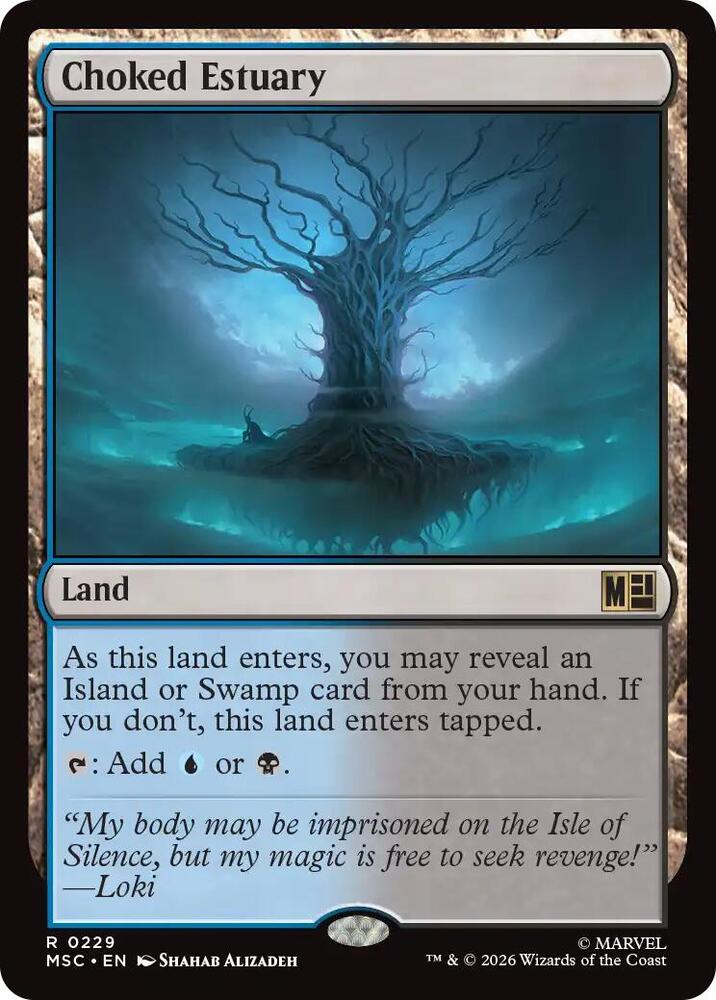
The Doom Prevails precon you may want to keep dual lands that have a "this land enters tapped unless..." ability. Usually you will need another land type in play, or in your hand.
 |
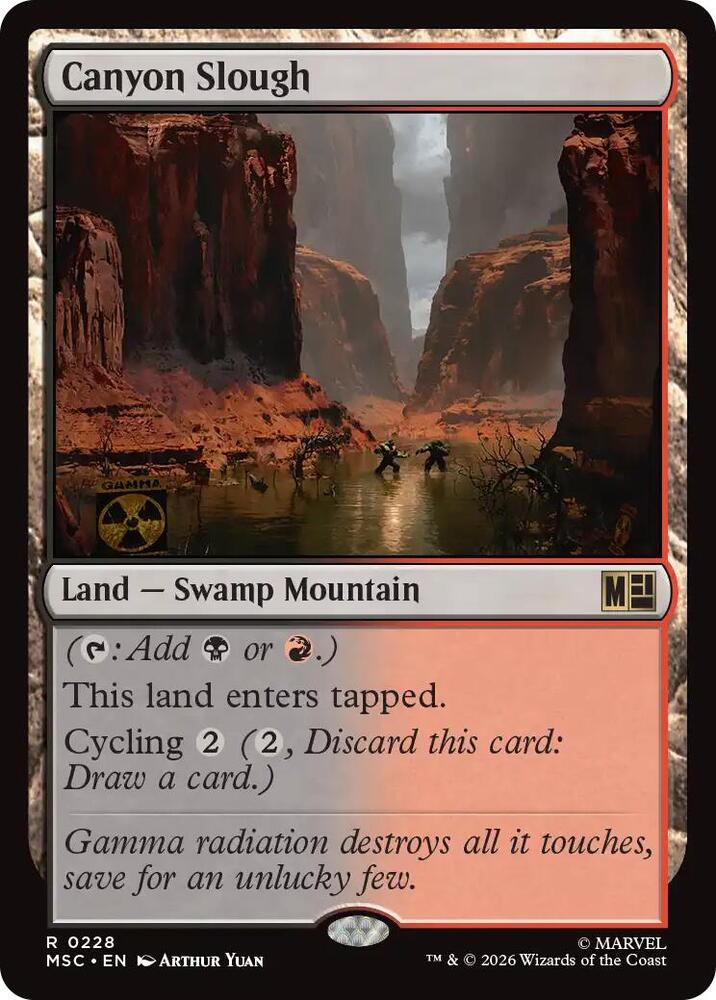 |
Choked Estuary for example, comes in tapped unless you reveal an island or swamp from your hand. Canyon Slough is both a Swamp and a Mountain, so revealing that card to your opponents will allow you to play and use Choked Estuary on the same turn played.
You don't need expensive lands to improve a mana base. Even replacing a few lands that always enter tapped can noticeably speed up your deck.
If your deck has three or more colors, mana fixing becomes even more important. Make sure you have enough sources for each color, especially colors that appear often in your commander’s mana cost and early spells.
Mana Tip: Chromatic Lantern is an excellent upgrade for many three- or five-color Commander decks because it fixes all of your colors. It isn't an automatic inclusion in every deck, but it's worth considering if you're struggling with your mana.
Add More Ramp
Ramp helps you get more mana than you would normally have by playing one land each turn. In Commander, ramp is important because games are longer and many decks use expensive spells.
When upgrading a precon, look for ramp that fits your deck. Artifact decks may want mana rocks. Green decks may prefer ramp spells that search for basic lands. Token decks may benefit from Treasure makers if they also support the deck’s theme.
Try to prioritize ramp that costs two or three mana. A ramp spell that costs five mana may be powerful, but it does not help much if you need mana before you can cast it.
Add More Card Draw
Running out of cards is one of the biggest reasons new Commander players fall behind.
Look for card draw that supports your strategy. Artifact decks should draw from artifacts. Token decks should reward token creation. Lifegain decks should draw when they gain life.
The best card draw doesn't just refill your hand—it works with your commander.
Improve Your Removal and Interaction
Commander is a multiplayer format, so opponents will have powerful creatures, artifacts, enchantments, planeswalkers, and sometimes game-ending combos.
Your deck needs ways to interact with those threats. Include both single-target removal and at least one board wipe.
You do not need to remove every threat your opponents play, but you should have enough interaction to stop the cards that would otherwise take over the game.
Lower the Mana Curve
A lot of precons include several expensive cards because big spells are fun in Commander. The problem is that too many expensive cards can leave you with slow opening hands and nothing to do during the early turns.
Look at the mana costs in your deck. If you have several cards that cost six, seven, or more mana, consider whether all of them are necessary.
Keep the expensive cards that can win the game, create a major advantage, or strongly support your commander. Cut the ones that are only “fine” when you cast them.
Replacing a few expensive cards with cheaper ramp, card draw, removal, or creatures that support your strategy can make the deck feel much smoother.
Make Smart Cuts
The hardest part of upgrading a precon is usually deciding what to remove.
A good place to start is with cards that are:
- Too expensive for what they do
- Not connected to your commander’s strategy
- Too situational
- Outclassed by a cheaper or more useful card
Try not to cut every card that is not directly tied to your commander. Commander decks still need general utility cards, ramp, card draw, and interaction.
The goal is not to make every card do the same thing. The goal is to make sure every card has a reason to be in the deck.
Upgrade in Small Batches
You do not need to spend a large amount of money to improve a precon.
Start by making five to ten changes. Play the deck again and see how those changes feel. This makes it easier to tell which upgrades are helping and keeps you from buying cards that do not actually improve your experience.
A good first round of upgrades may look like this:
- Add two ramp cards
- Add two card-draw cards
- Add two removal spells
- Add two cards that directly support the commander
- Cut eight cards that were slow, weak, or off-theme
As you play more games, you can continue adjusting the deck based on what it needs.
Keep Your Playgroup in Mind
Commander decks can be built at many different power levels. Before making major upgrades, think about the people you play with.
If your group plays casual games with mostly precons and upgraded precons, you may not want to add fast mana, expensive tutors, or combos that end the game very early. If your group plays stronger decks, you may need more efficient interaction and faster ways to develop your board.
The best Commander deck is not always the strongest deck possible. It is the deck that gives you good games with the people you play with.
Final Thoughts
Upgrading a Commander precon doesn't have to be expensive or complicated.
Start by playing the deck, learn what your commander wants to do, then make a few focused upgrades at a time. Improving your mana, adding card draw, increasing your ramp, and removing cards that don't fit your strategy will make a much bigger difference than chasing the most expensive cards.
The best Commander deck isn't the one with the highest price tag—it's the one you enjoy playing.