One of the biggest obstacles a Magic: The Gathering player makes isn’t learning new rules or discovering powerful cards—it’s understanding why some decks feel smooth and consistent while others feel clunky, even when both are full of strong cards.
The answer almost always comes down to this question:
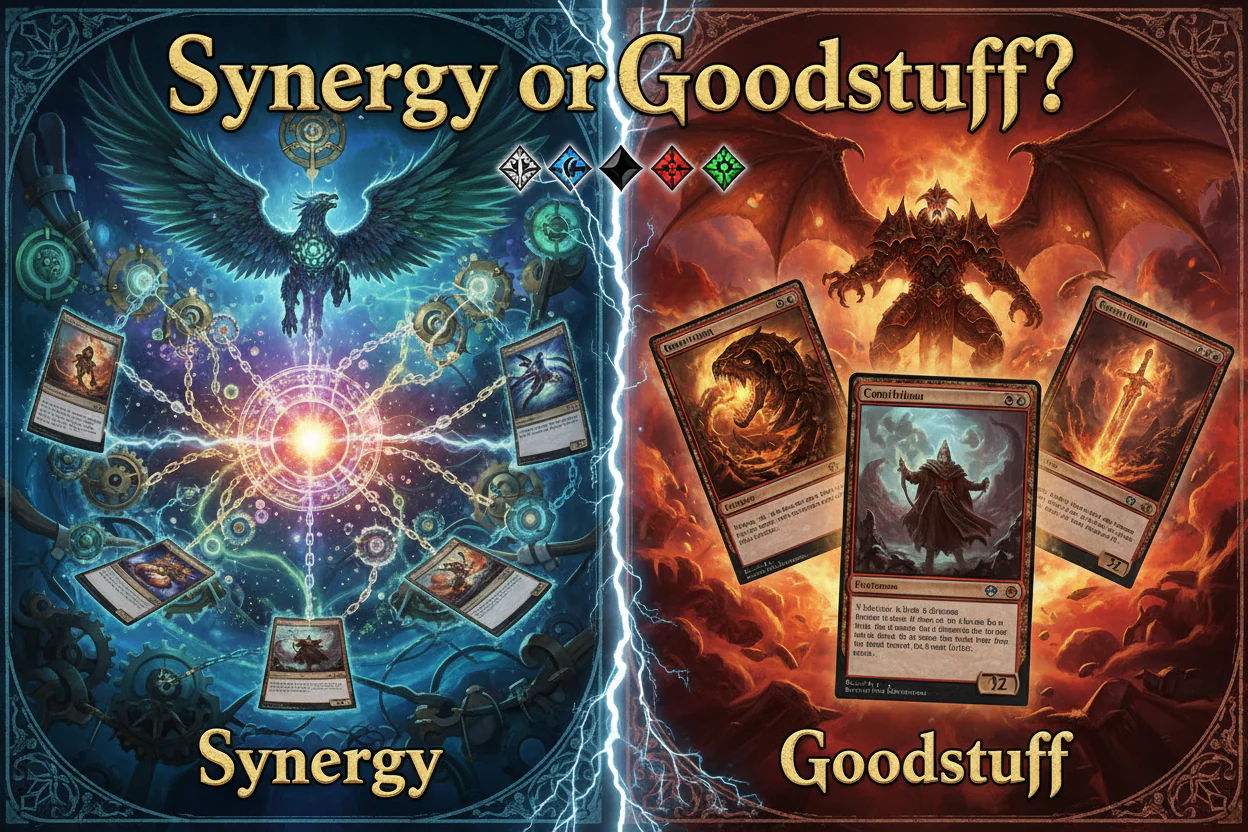
Is your deck built on synergy, or is it just goodstuff?
Understanding the difference between these two approaches—and knowing when to use each—is the core of good deckbuilding.
What Is “Goodstuff”?
A goodstuff deck is built around cards that are simply powerful on their own. These cards don’t need help to be effective—they generate value, answer threats, or dominate the board all by themselves.
Examples of Goodstuff Cards
- Creatures with strong enter-the-battlefield effects
- Efficient removal spells
- Planeswalkers that generate value without setup
- Cards that are “always good” no matter the board state
In Commander, goodstuff decks often:
- Feel strong early
- Have answers to many situations
- Lack a clear identity or win condition
Strengths of Goodstuff
- High individual card quality
- Flexible game plans
- Forgiving for newer players
Weaknesses of Goodstuff
- Inconsistent performance
- Can run out of momentum
- Often struggles to close games
Goodstuff decks can feel like they’re “doing things,” but not necessarily doing one thing well.
What Is “Synergy”?
A synergy deck is built around interactions between cards. Each individual card might look unimpressive on its own, but together they create something greater than the sum of their parts.
Examples of Synergy Decks
- Token decks where multiple cards reward creature creation
- Aristocrats decks built around sacrificing creatures
- Tribal decks that reward a specific creature type
- Artifact or enchantment engines
In synergy decks:
- Cards actively support one another
- The deck has a clear identity
- The win condition is often obvious
Strengths of Synergy
- Consistent game plan
- Clear path to victory
- Strong identity and theme
Weaknesses of Synergy
- Can fold if the engine is disrupted
- Requires careful deckbuilding
- Often needs more playtesting
Synergy decks feel smooth when they’re working—and frustrating when they aren’t.
Why Synergy Wins More Games Than Goodstuff
In Commander, you’re playing against three opponents, not one. Trading one-for-one with removal or relying on isolated, powerful cards usually isn’t enough.
Synergy decks:
- Generate repeatable value
- Scale naturally over time
- Punish opponents for ignoring your engine
A single powerful card might answer a threat—but a synergistic board state can overwhelm an entire table.
The Commander Is the Key
Your commander should tell you whether you’re building synergy or goodstuff. When building a deck, try to keep your color strengths in mind, what does your commander do, and what sub-strategy do you want to accomplish?
How to Tell Which One Your Deck Is
Ask yourself these questions:
- Can I explain my deck’s plan in one sentence?
- Do most of my cards support that plan?
- Does my commander actively reward my choices?
If the answer to any of these is “no,” your deck may be full of the good stuff.
Finding the Right Balance
The best decks aren’t 100% synergy or 100% goodstuff—they’re mostly synergy with a few powerful flex slots.
A helpful rule of thumb for casual Commander:
- 65–75% synergistic cards
- 10–15% interaction
- 5–10% flexible goodstuff
Goodstuff cards should support your synergy, not replace it.
Final Thoughts
Understanding synergy versus goodstuff will determine where decks stop feeling random and start feeling intentional. When your deck has a clear identity, every draw feels meaningful, every play advances your plan, and your wins feel earned.